Anode Cage Installation Aid (ACIA)
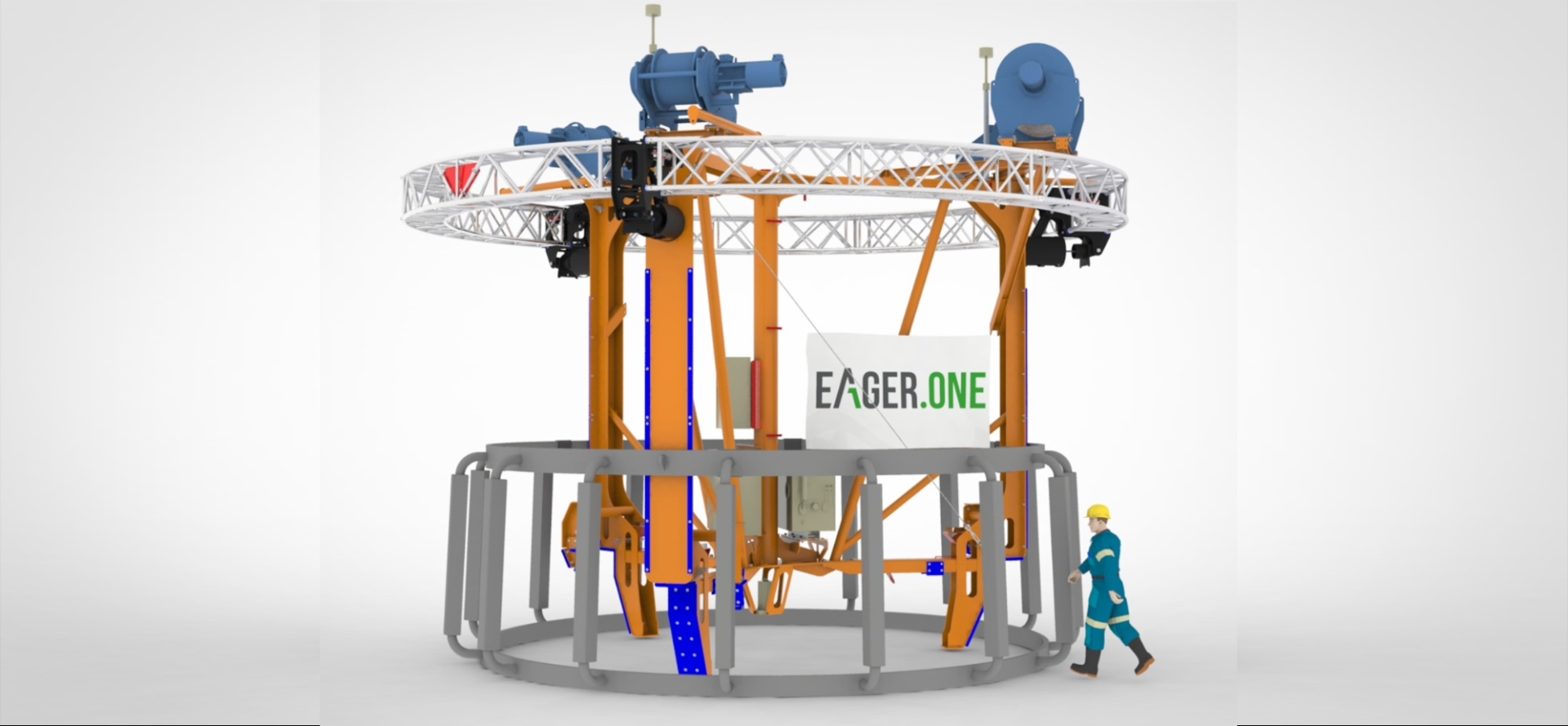
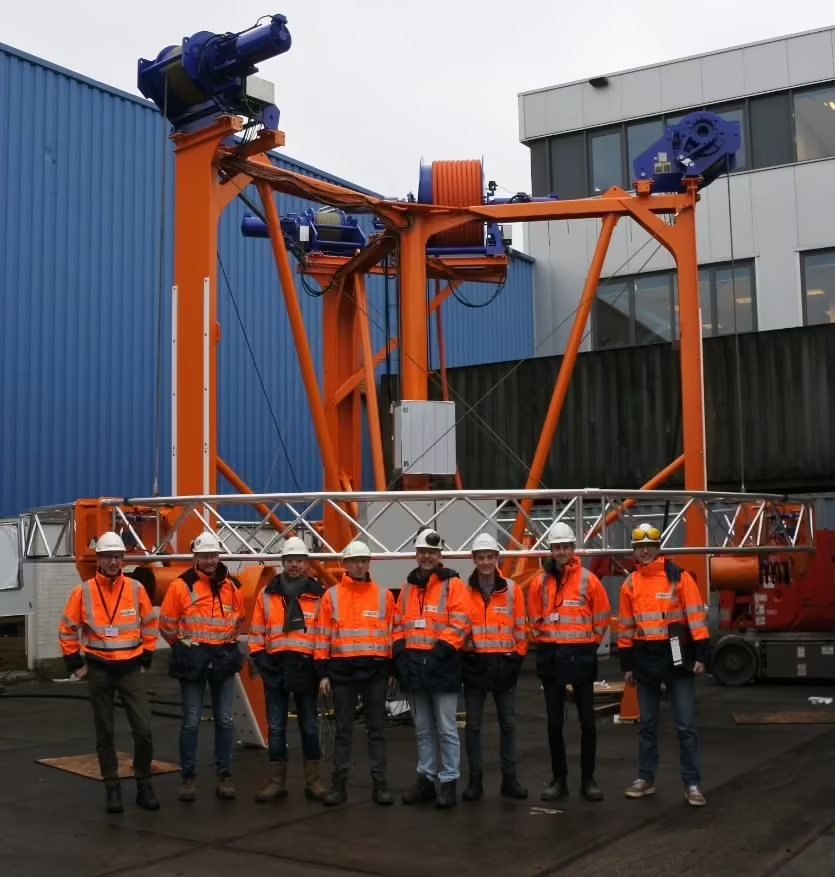

Eager.one was consulted by Van Oord Offshore Wind for a new type of Anode Cage Installation Aid. Van Oord contracted Eager.one, based upon Eager.one’s previous experience supplying tools for installing Anode Cages over monopiles of offshore windfarm foundations.
installation from floating vessel
Previous supplied tools were based on installing Anode Cages by means of a jack-up vessel. And most of these Anode Cages were designed for installation by means of a spreader. However, the request of Van Oord was different. The Anode Cage will be installed from a floating vessel (Van Oord Svanen) and tolerances are marginal.
Installation Aid
The challenge presented to the Eager.one team was to design an installation aid that can install the Anode Cage over the monopile, while preventing collision between the Anode Cage and the monopile. This will be done by means of a service crane with limited capacity, from a floating vessel.
Operational Challenges
Based on these starting points we have designed and constructed the Anode Cage Installation Aid.
Weight restrictions, precise handling and monitoring were the main operational challenges, starting with how to position the Anode Cage over the monopile.
Installation from a floating vessel
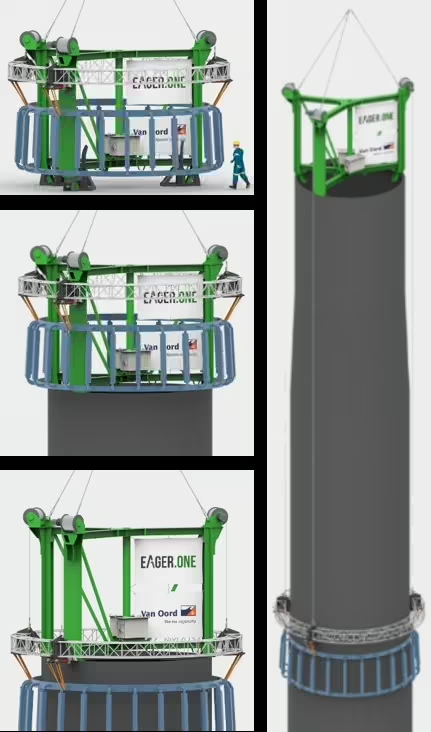
Installing the anode cage directly over the monopile is not possible due to the motions of the vessel and marginal tolerances. Therefore the anode cage installation aid, with the anode cage connected to it, will first be lifted onto the monopile.
Once positioned according to the required heading, the three synchronized winches will lower the anode cage over the anode cage installation aid towards the monopile flange. By means of eye-to-eye slings the AC is connected to a lowering ring. This is an aluminum circular truss frame that will guide the ACs towards the installation position.
Spring-loaded wheels are connected to the lowering ring. These wheels follow the ACIA structure down to the MP and make sure that the AC will stay exactly centered and will not collide with the monopile. The hydraulics and electrical and instrumentation fitted onto the lowering ring are powered via the umbilical winch fitted onto the ACIA.
Limited crane capacity
The design of the ACIA had weight restrictions and therefore lightweight materials such as aluminum were used.
Positioning and monitoring of the Anode Cage Installation Aid
The anode cage will be lowered to the installation position. This will be monitored by means of cameras, supported by lighting for visual confirmation of the anode cage position. In addition, the exact position can be determined by a pay-out measuring system in the winches.
As soon as the anode cage has reached the installation position, the pin-pushers will release the eye-to-eye sling on one side. In case the sling is stuck the secondary pin-pushers can release the other side of the sling as a mitigation. Once installed, the aluminum ring will be lifted back to the ACIA base, that is still positioned on top of the monopile. After completion the ACIA will be lifted to the barge for a following anode cage installation.
The Factory Acceptance Test has been successfully completed after which the ACIA has been prepared for transport to the onshore harbor for commissioning and training of the operational crew of Van Oord.
Installation process
The Anode Cage Installation Aid is specifically designed to install an Anode Cage over a monopile, while preventing collision between the Anode Cage and the monopile. This will be done by means of a service crane with limited capacity, from a floating vessel.


More equipment for the Wind industry
Discover how we've supported complex wind energy projects - onshore and offshore - with smart lifting engineering and custom-made mission equipment.


Custom-made Equipment
Are you also working on lifting and/or handling projects that require custom-made lifting or rigging equipment? Please do not hesitate to contact us to discuss the possibilities for your specific requirements.